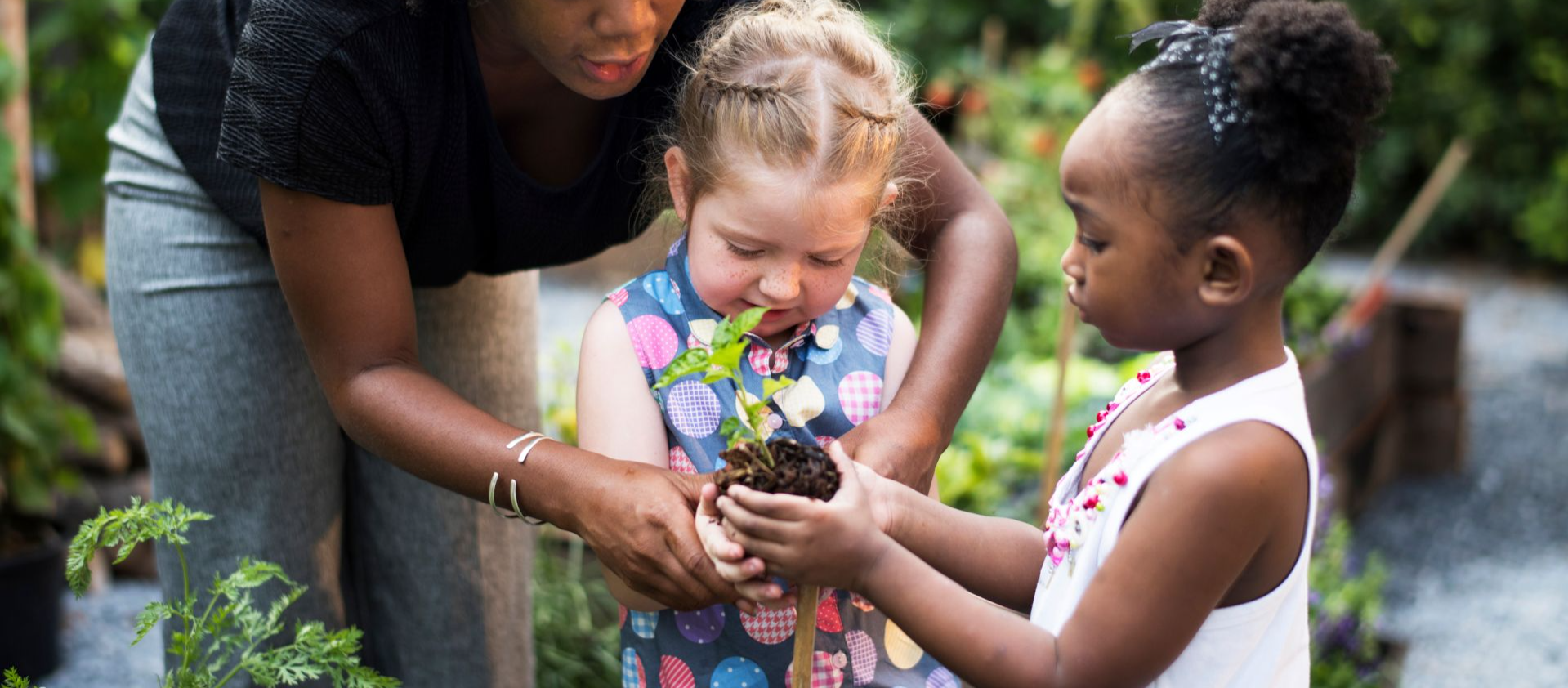
When educators think about sensory play, they often picture sensory bins, playdough, or water tables. But one of the richest sensory learning environments might already be right outside your door! Mud kitchens transform outdoor spaces into
hands-on learning environments where children mix, pour, scoop, create, and pretend. What may look like simple messy play is actually supporting language development, problem-solving, social skills, sensory exploration, and creativity all at once, and reflects how sensory learning shows up far beyond traditional sensory tables.
For educators interested in exploring sensory play across the entire classroom day, IMPACT’s on-demand course
Beyond the Sensory Table: Classroom Strategies for Sensory Play expands on these ideas with practical strategies and activity inspiration.
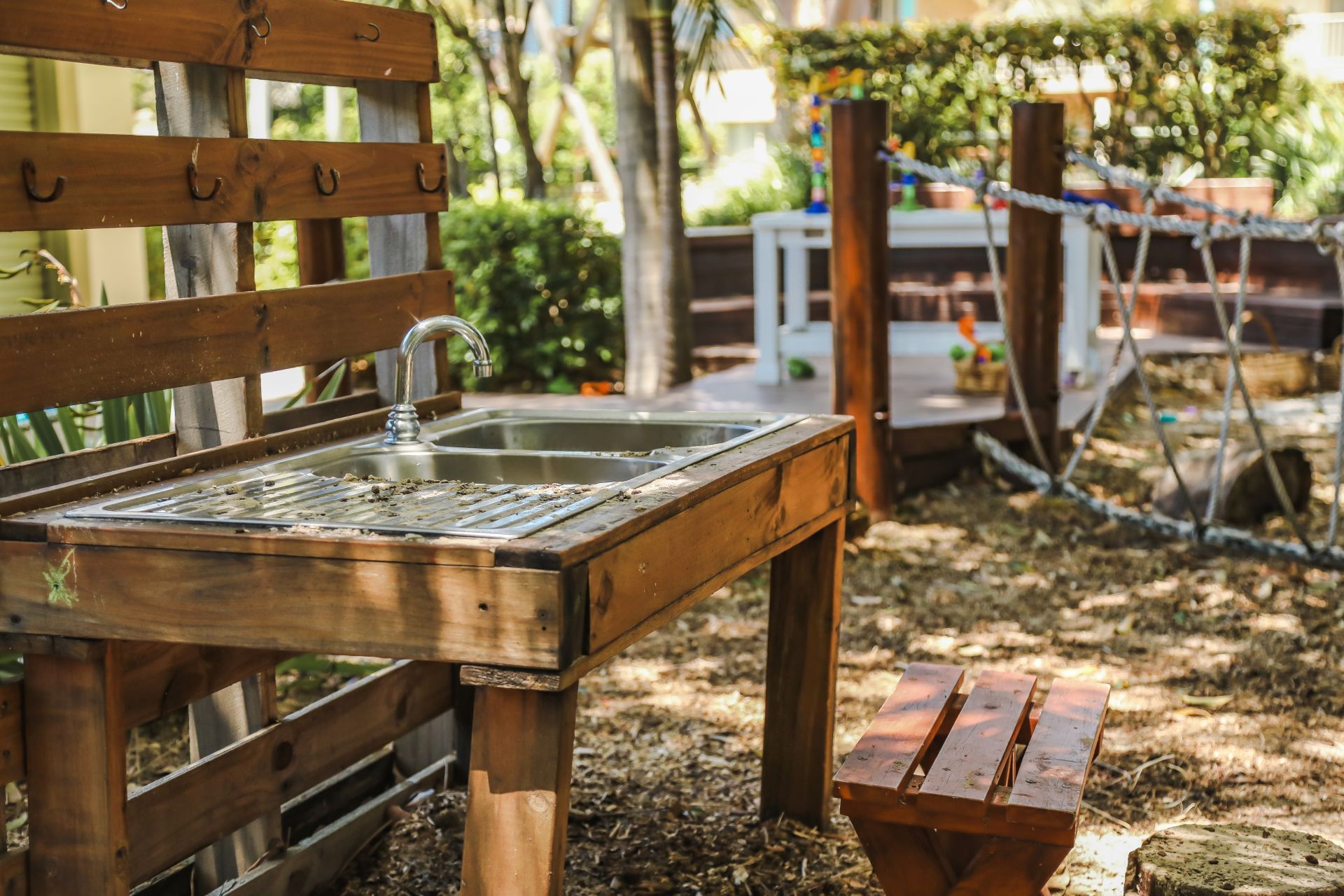
A mud kitchen is an outdoor play area where children use natural materials such as dirt, water, sticks, leaves, flowers, sand, and stones to engage in
imaginative play and exploration.
Many mud kitchens include simple materials such as:
- Pots, pans, bowls, and utensils
- Measuring cups and spoons
- Buckets or tubs for water
- Shelves, tables, or work surfaces
- Loose parts collected from nature like sticks, pinecones, flowers, or pebbles
Children might create "soups," bake pretend cakes, run a restaurant, mix potions, or conduct science experiments as they explore texture, consistency, and cause-and-effect. The magic of a mud kitchen lies in its open-ended nature. Children are free to explore ideas, test theories, and create their own play experiences. They learn through trial and error as they discover what happens when they add more water, combine materials, or try different tools.
Executive Functioning
Mud kitchens promote planning, sequencing, and flexible thinking. Children decide what they want to make, gather materials, and figure out the steps needed to bring their ideas to life. This might include choosing containers, deciding how much water to add, or determining who will do each part of the “recipe.” As play unfolds, children often need to adapt their plans when materials don’t behave as expected. Did adding too much water make the mixture runny? Maybe a container isn’t the right size? Because there is no single correct outcome, children are able to practice persistence in a low-pressure context.
These experiences also build impulse control and self-regulation as children wait for tools, negotiate roles with peers, and manage frustration when ideas don’t go as planned.
Language and CommunicationMud kitchens naturally encourage conversation. Children describe what they are making, explain recipes, and share ideas with their friends.
You might hear children say:
- "This soup needs more water."
- "I'm making a birthday cake."
- "Can you pass me the spoon?"
- "Let's add leaves and mix it together."
Fine Motor DevelopmentScooping, pouring, stirring, pinching, and transferring materials strengthen the small muscles in children's hands and fingers. In a mud kitchen, children are practicing bilateral coordination (using both hands together in coordinated ways). For example, when a child stabilizes a bowl with one hand while stirring with the other, they are building the hand, wrist, and finger strength they will need for handwriting, as well as functional skills such as cutting with scissors and fastening buttons and zippers.
Sensory ExplorationMud kitchens provide rich sensory experiences.
Children can explore:
- Wet versus dry materials
- Smooth versus rough textures
- Thick versus thin mixtures
- Heavy versus light object
These everyday experiments build vocabulary, support turn-taking, and help children make sense of the natural world.
Many children who find it challenging to engage in more structured or adult-directed activities often become deeply absorbed in mud kitchen play. This is because the experience is entirely child-led, meaning children are free to decide what they want to do, how they want to do it, and how long they want to stay engaged without pressure to produce a specific outcome. There is no single “right” way to participate, which reduces performance demands and allows children to explore without fear of making mistakes.
The sensory-rich nature of the mud kitchen also plays a powerful role in engagement. For many children, the combination of movement, tactile input, and hands-on experimentation is highly regulating and motivating. Pouring water, squeezing mud, and stirring mixtures all provide meaningful sensory feedback that helps some children stay grounded and focused in the activity.
Mud kitchens don’t need to be expensive. Many educators create engaging mud kitchens using donated materials or recycled kitchenware. Gathering and collecting natural materials for the mud kitchen can be its own activity children can participate in.
- Access to dirt and water
- A sturdy work surface (a low table, crate, tray, or even a flat log)
- A few containers and mixing tools
- Pinecones
- Sticks
- Rocks
- Leaves
- Flower petals
- Bark
- Sand
- Metal mixing bowls
- Muffin tins
- Whisks
- Measuring cups
- Colanders
- Ladles
- Watering cans
- Spray bottles
Mud kitchens are engaging for children across a wide range of developmental stages, from young toddlers who are just beginning to engage alongside peers through parallel play, to older preschoolers who are collaborating, negotiating roles, and creating complex pretend play scenarios together.
One of the greatest strengths of a mud kitchen is its flexibility, which makes it naturally inclusive for children with a wide range of abilities, interests, and sensory preferences. Educators can support participation by offering different ways to engage, such as tools for children who prefer not to touch mud, a mix of dry and wet materials, raised surfaces for accessibility, and simple visual supports for actions like scoop, pour, and mix, or a simple “recipe” sequence. Participation will look different for each child. One child may spend time mixing and exploring textures, another may focus on collecting natural materials, another may observe before joining in, and another may participate by handing over tools or suggesting ideas. You can also guide and extend play by introducing pretend play elements such as menus, recipe cards, or “order forms.”
One of the most common concerns educators have about mud kitchens is
the mess. While mud play is naturally messy, most of it can be managed through clear routines and simple boundaries. For example, defining where mud play happens, using clearly designated containers or surfaces, building consistent clean-up routines, and having smocks or a change of clothes available if needed goes a long way in managing the mess. Many educators also find that when children are actively involved in caring for the space (such as returning tools, rinsing containers, and washing hands afterward) the overall level of mess is much more manageable than expected.
If you’re interested in expanding sensory experiences beyond designated sensory areas, IMPACT’s on-demand course
Beyond the Sensory Table: Classroom Strategies for Sensory Play explores how sensory learning shows up across the entire classroom day.
In the course, you'll discover:
- How children’s sensory systems develop and influence behavior and engagement
- Practical ways to embed sensory exploration into everyday routines and play
- 50+ ready-to-use sensory ideas you can bring into your classroom right away
A mud kitchen does not need to be elaborate to be meaningful. All you need is a small amount of dirt, access to water, and enough space for children to move and experiment. What matters most is not the setup, but the opportunity for children to return, repeat ideas, explore, and lead their own play. When we step back and allow space for that kind of learning to unfold, we often see just how rich and intentional children’s play can become.
So let’s embrace a little mud this summer, and the meaningful learning that comes along with it!
- The IMPACT Team
Note: Course links and offers mentioned in this post may have changed since publication. To see what’s currently available, visit our course library.