Product Art vs. Process Art:
Understanding the Difference as an Early Childhood Educator
Walk into almost any early childhood classroom and you’ll probably find art happening somewhere. Maybe there’s a basket of crayons and paper, paint at the easel, or a seasonal project hanging on the wall. But take a closer look at what children are actually being asked to do. Are they exploring what happens when they mix colors, make marks, or try a new material? Or are they all making the same paper pumpkin, handprint turkey, or flower?
Both kinds of art experiences can have a place in early childhood. But they offer children very different opportunities to explore, create, and learn. Understanding the difference between product art and process art can help educators make more intentional choices about the art experiences they offer.
Both kinds of art experiences can have a place in early childhood. But they offer children very different opportunities to explore, create, and learn. Understanding the difference between product art and process art can help educators make more intentional choices about the art experiences they offer.
What Is Process Art?
Process art is focused on the experience of creating, rather than producing a particular finished product. Instead of starting with, “What are we going to make?” the educator might start with, “What can children explore with these materials?”
In a process-focused art experience:
-
There is more than one way to participate.
-
Children can make choices about how they use the materials.
-
The finished artwork doesn't need to look a certain way.
-
Children can explore, repeat, experiment, and change direction.
-
The educator provides the materials and environment without taking over the creative process.
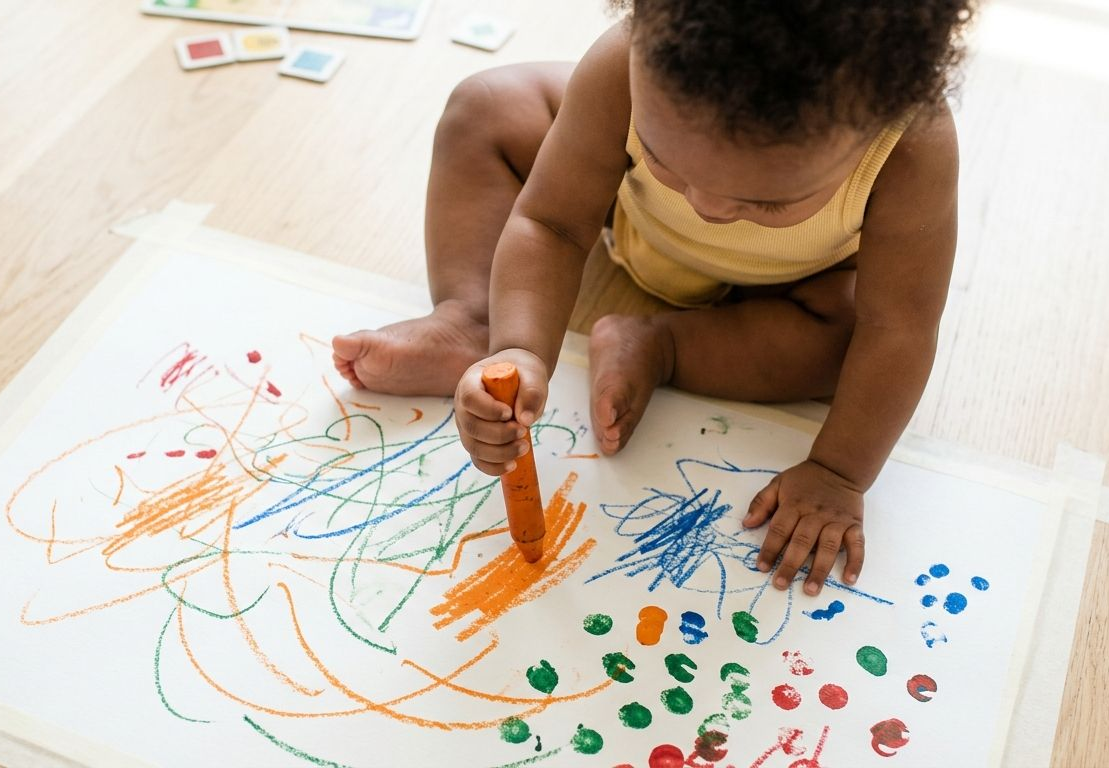
Imagine putting paint into a sealed plastic bag and placing it on the floor for an infant to explore. The infant might press, pat, swipe, or squeeze the bag. They might notice the paint moving or become fascinated by the feeling of pressing their hand against the surface. Or imagine offering a group of toddlers some paper, paint, and several different tools. Children might use a sponge, a paintbrush, or decide that their hands and fingers work best. There isn't a "right" painting at the end, and that's the point. The National Association for the Education of Young Children describes process-focused art as an experience without a predetermined right answer. Instead, children have opportunities to explore materials, techniques, and ideas in their own ways.
What Is Product Art?
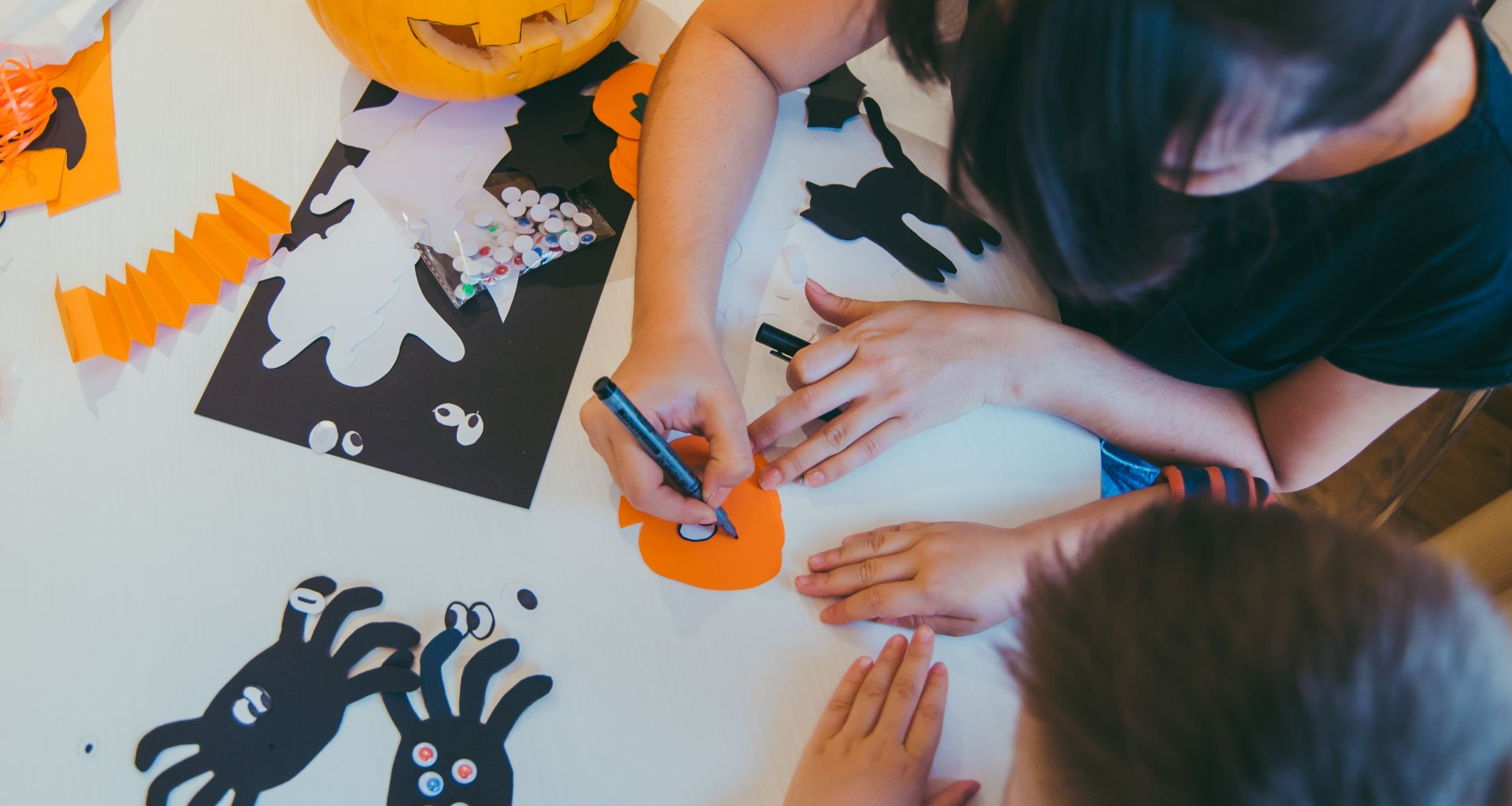
Product art starts with a specific finished product in mind. The educator may have a model or example for children to copy. There may be specific materials, steps, or instructions, and the goal is often for everyone to end up with something recognizable and similar.
Think:
-
“First, glue the eyes here.”
-
“Put three feathers on the turkey.”
-
“We're making a flower today.”
Product art isn't inherently bad. There are times when teacher-directed activities can support children's ability to listen, follow a sequence, practice a particular skill, or participate in a shared classroom experience. The important question is: What are you hoping children will get from the experience? If the goal is to practice a specific sequence or technique, a more directed activity may make sense. If the goal is creativity, experimentation, curiosity, and making choices, an open-ended experience gives children more room to do that.
Why Does the Difference Matter?
It can be easy to think of art as something children make. But for very young children, art is also something they do. They are constantly experimenting with cause and effect: What does this feel like? What happens when I use this tool instead?
Head Start notes that early art experiences can support creative problem-solving and help children explore their bodies and their world. Process art also creates room for children with different abilities, interests, and developmental levels to participate in different ways. A child who doesn't want to touch a particular texture might watch first or choose a different tool. Another child who is still developing fine motor control might use their whole hand instead of trying to grasp a small tool. A child who communicates without spoken words can still make choices and show you what interests them. Participation doesn't have to look the same for every child.
Head Start notes that early art experiences can support creative problem-solving and help children explore their bodies and their world. Process art also creates room for children with different abilities, interests, and developmental levels to participate in different ways. A child who doesn't want to touch a particular texture might watch first or choose a different tool. Another child who is still developing fine motor control might use their whole hand instead of trying to grasp a small tool. A child who communicates without spoken words can still make choices and show you what interests them. Participation doesn't have to look the same for every child.
Is Process Art Just "Letting Kids Do Whatever They Want"?
Not exactly. Process art is open-ended for the child, but that doesn't mean the educator's role disappears. There is still a lot of intentional teaching happening behind the scenes. The educator chooses what materials are safe and developmentally appropriate, decides how they will be presented, where the activity will take place, and adjusts the experience when a child needs more or less support.
The difference is that those decisions create a framework for exploration rather than dictate the final product. A two-year-old doesn't need unlimited access to every art material in the room in order to experience process art. An infant doesn't need to independently manage an art activity in order for the experience to be meaningful. The adult creates the conditions, and the child gets to explore within them.
The difference is that those decisions create a framework for exploration rather than dictate the final product. A two-year-old doesn't need unlimited access to every art material in the room in order to experience process art. An infant doesn't need to independently manage an art activity in order for the experience to be meaningful. The adult creates the conditions, and the child gets to explore within them.
One Simple Shift: Take Away the Example
If you're looking for an easy place to start shifting your art experiences toward process art, try removing the teacher-created example. This can be surprisingly powerful. When children see a finished example, they often assume that the example is what they're supposed to make. Even when we tell children, “You can make it however you want!” our model may communicate something very different.
Instead, try introducing the materials without showing children what their finished work should look like. You might say: “Today we're going to explore paint with some different tools.” Then let children discover what those tools can do. You may be surprised by what they come up with. NAEYC recommends giving children opportunities to explore art materials without expectations for a particular end product and emphasizes the value of allowing children time and space to develop their own ideas.
Instead, try introducing the materials without showing children what their finished work should look like. You might say: “Today we're going to explore paint with some different tools.” Then let children discover what those tools can do. You may be surprised by what they come up with. NAEYC recommends giving children opportunities to explore art materials without expectations for a particular end product and emphasizes the value of allowing children time and space to develop their own ideas.
What About Those Cute Seasonal Crafts?
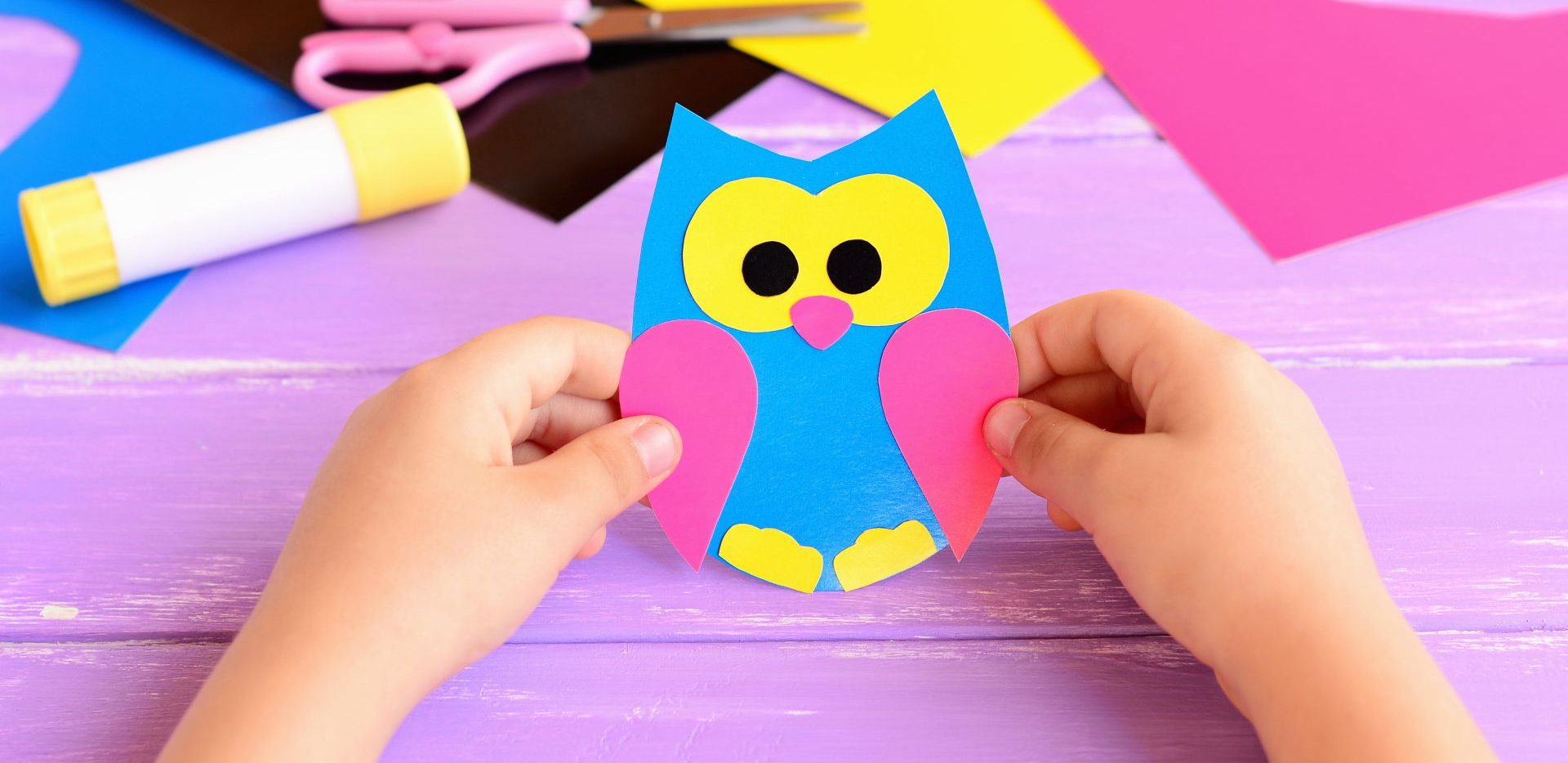
Let's be honest: sometimes the handprint turkey is fun. Families may enjoy receiving a recognizable keepsake, and educators may enjoy making seasonal projects with children too. The goal isn't to eliminate every teacher-directed art activity. Instead, consider balance. If every art experience has a predetermined outcome, children have fewer opportunities to experiment and make creative decisions. Try asking yourself: How much of our art experiences are designed around what the adult wants the finished product to look like? Maybe there are places where you could make a little more room for children’s ideas. The Illinois Early Learning Project has additional ideas for incorporating process-focused art into early childhood settings, including ways to use everyday and recycled materials.
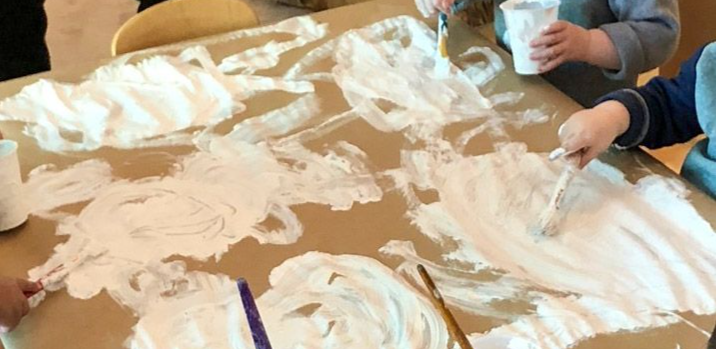
"A Snowy Day" : Real art from a toddler classroom inspired by a rare snow day in Washington State
Want to Go Deeper with Art?
Knowing the difference between product art and process art is a great starting point. But the real work comes when you're standing in your classroom with a group of young children, a pile of art materials, and a very real question:
“Okay...what do I actually do with this age group?”
Our new on-demand course, Art Experiences for Infants & Young Toddlers, takes a closer look at what meaningful art experiences can look like for our youngest learners. This course isn't simply a collection of art activities. It was developed by educators who have actually worked in infant and toddler classrooms and understand that a 5-month-old, a 12-month-old, and an 18-month-old all have very different abilities, interests, and ways of interacting with art materials.
Inside the course, you'll go beyond the product-versus-process distinction to:
Inside the course, you'll go beyond the product-versus-process distinction to:
-
Design process art experiences that are engaging and developmentally appropriate
-
Adapt art experiences based on children’s sensory preferences and motor abilities
-
Explore practical activity ideas broken down by age, including 3-6 months, 6-9 months, 9-12 months, and beyond
Ready for fresh art ideas for your classroom? Check out the eLearning course: Art Experiences for Infants & Young Toddlers. Because the most meaningful part of art isn’t what they make – it’s what they discover along the way. Happy creating!
~The IMPACT Team
~The IMPACT Team
Note: Course links and offers mentioned in this post may have changed since publication. To see what’s currently available, visit our course library.
If you're interested in learning more about supporting children of all abilities in your classroom, check out these courses:
IMPACT™ content is developed by a multidisciplinary team and makes every effort to ensure that information provided reflect evidence-based, early childhood best practices. Providers should always follow local jurisdictions and other governing bodies rules and regulations when implementing any strategy or suggestion. Any actions, or lack of actions, are not the responsibility or liability of Northwest Center Kids – IMPACT™.
All content, including the presentation thereof on this web site, is the property of Northwest Center IMPACT™, and protected by U.S. and international copyright laws. You may not copy, reproduce, distribute, transmit, modify, create derivative works, or in any other way exploit any part of copyrighted material without the prior written permission from Northwest Center.
All content, including the presentation thereof on this web site, is the property of Northwest Center IMPACT™, and protected by U.S. and international copyright laws. You may not copy, reproduce, distribute, transmit, modify, create derivative works, or in any other way exploit any part of copyrighted material without the prior written permission from Northwest Center.
Connect
-
Seattle, WA
-
impact@nwcenter.org
-
NWC Home
Policy pages
Subscribe & stay up to date
Thank you!
Copyright © 2026
IMPACT™ content is developed by a multidisciplinary team and makes every effort to ensure that information provided reflect evidence-based, early childhood best practices. Providers should always follow local jurisdictions and other governing bodies rules and regulations when implementing any strategy or suggestion. Any actions, or lack of actions, are not the responsibility or liability of Northwest Center Kids – IMPACT™. All content, including the presentation thereof on this web site, is the property of Northwest Center IMPACT™, and protected by U.S. and international copyright laws. You may not copy, reproduce, distribute, transmit, modify, create derivative works, or in any other way exploit any part of copyrighted material without the prior written permission from Northwest Center.