As the weather warms up and children naturally gravitate outdoors, many preschool and early childhood educators begin looking for fresh ways to combine play, learning, movement, and connection with nature. One of the most engaging ways to do this is by creating a sensory garden. And it’s surprisingly simple!
A sensory garden is an interactive outdoor learning space designed to engage children’s senses through touch, smell, sight, sound, taste, and movement. For young children, especially those who learn best through hands-on exploration, sensory gardens can become a calming retreat, a science lab, a dramatic play space, and a rich sensory experience all at once.
The best part? You do not need a large playground or expensive materials to get started. Sensory gardens can be adapted for infant, toddler and preschool settings using containers, a few safe plants, and a willingness to explore.
If your days are already full and you’re thinking, ‘This sounds great but I don’t have time for another project,’ you’re not alone. The good news is that sensory gardens don’t have to be one more thing. They can become part of what you’re already doing outside.
Young children learn through sensory experiences. When children rub soft lamb’s ear leaves between their fingers, smell fresh mint, listen to ornamental grasses moving in the wind, or crack open snap peas to taste what is inside, they are building brain connections through direct experience.
Outdoor sensory play supports:
-
Language development as children describe experiences
-
Fine motor skills through digging, pinching, pouring, and planting
-
Scientific thinking through observation and experimentation
-
Emotional regulation through calming sensory input
-
Social connection through collaborative care of the garden
Research continues to show the importance of outdoor learning and nature play for children’s mental health, stress reduction, attention, and overall development. The National Association for the Education of Young Children (NAEYC) highlights the value of outdoor environments as rich spaces for child-led exploration and development. Check out
NAEYC Outdoor Play Resources to learn more.
Many educators also notice something special happens when they shift away from heavily structured activities and instead slow down outdoors with their students. The child who struggles during circle time may become deeply engaged while watering plants. A child who rarely speaks during group activities may suddenly begin describing the smell of mint. Children who experience stress or dysregulation often find calming sensory input outdoors that helps their bodies feel more organized and safe. Outdoor sensory play can create opportunities for connection, curiosity, and regulation in ways that feel natural. Often, some of the richest conversations and learning moments happen quietly alongside children while digging in soil, noticing insects, or simply observing what has changed in the garden from one day to the next.
The goal of a sensory garden is variety. Think about including plants and materials that invite children to explore different sensations safely.
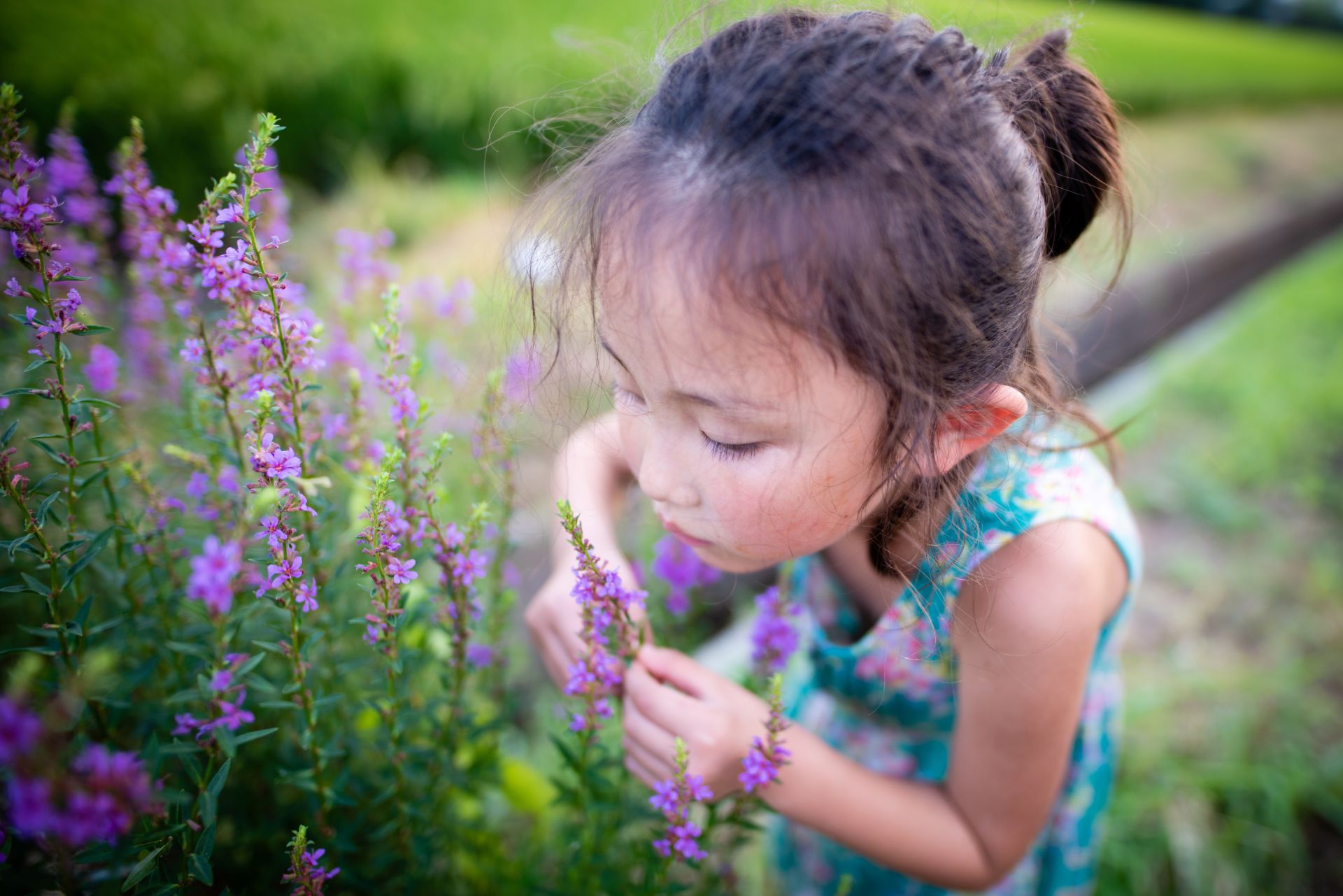
Children are naturally drawn to interesting textures, which makes touch-focused plants one of the easiest ways to spark engagement outdoors. Soft and fuzzy lamb’s ear leaves, moss, ornamental grasses, velvety flowers like petunias, and soft herbs like sage, invite children to slow down and explore with their hands. As children touch different plants, educators can introduce descriptive language like fuzzy, silky, rough, bumpy, cool, or tickly.
Children often become fascinated by the “hidden” sensory properties inside plants. These moments often spark rich conversations and scientific curiosity. For example:
-
Aloe plants can be opened so children can explore the cool, sticky gel inside
-
Seed pods can be cracked open and examined
-
Herbs can be crushed gently between fingers
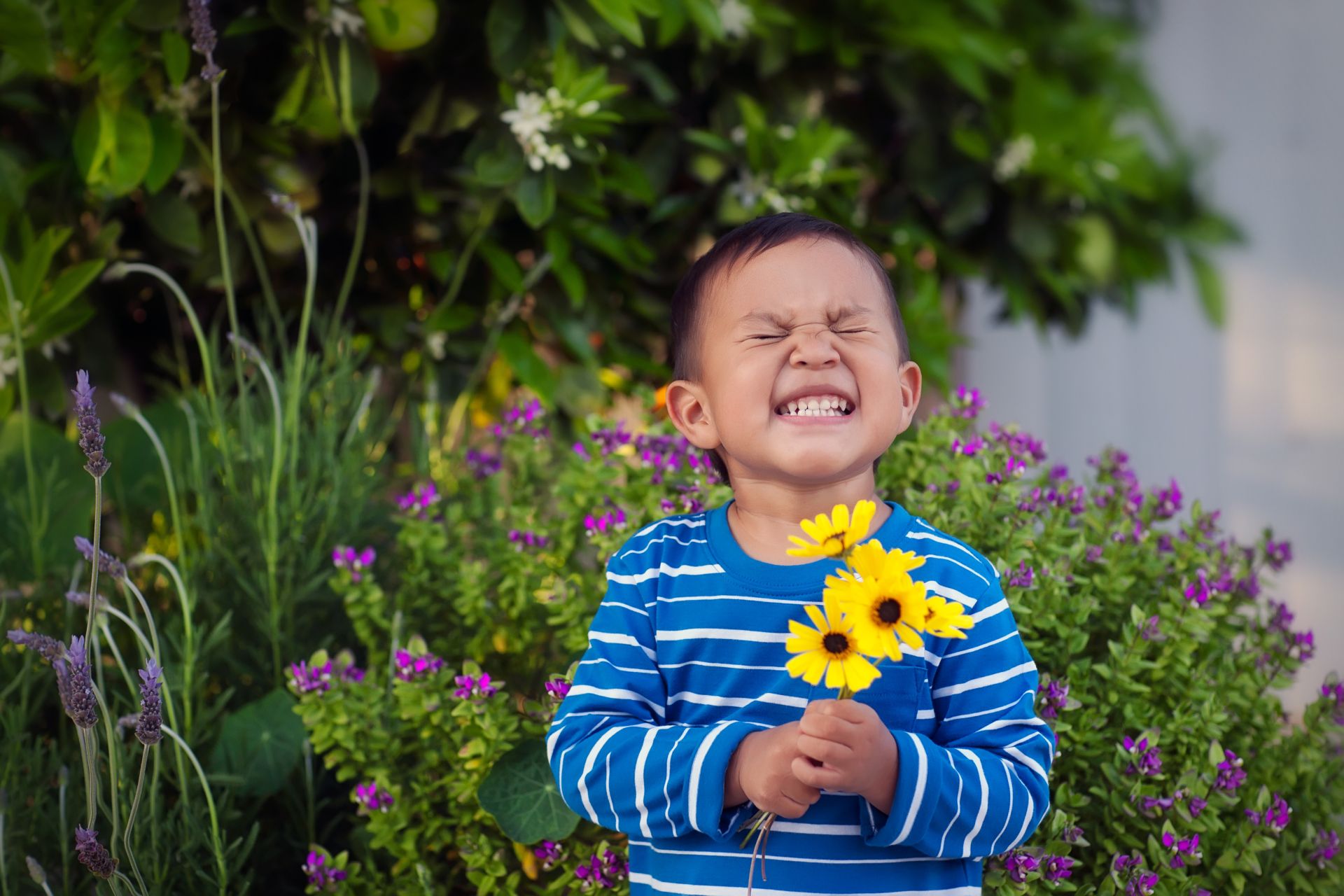
Bright colors, movement, and light naturally draw children into exploration. Colorful flowers and visually interesting plants help create an inviting outdoor space that children want to revisit again and again. They can also encourage children to observe changes over time, notice patterns, and develop early observation skills. Add visual elements, such as:
- Bright flowers like marigolds, zinnias, sunflowers, pansies, or calendula
- Tall plants that create movement and changing shadows
- Painted rocks or child-created garden art
- Pinwheels, ribbons, or streamers that move in the wind
- Butterfly- or bee-friendly flowers to attract pollinators
Even very young children will often pause to watch a bee move from flower to flower or notice a butterfly resting on a petal. Pollinator-friendly gardens can also support early environmental awareness by creating opportunities for conversations about nature, life cycles, and caring for living things.
Gardens can become wonderful spaces for listening and sound exploration as well. Consider including sound elements, such as wind chimes or ornamental grasses that rustle in the wind. For some children, especially those who become overwhelmed by loud classroom environments, outdoor sound experiences can feel more calming and predictable than indoor noise.
Scent can be incredibly powerful for memory, emotional regulation, and curiosity. Great child-friendly sensory plants include:
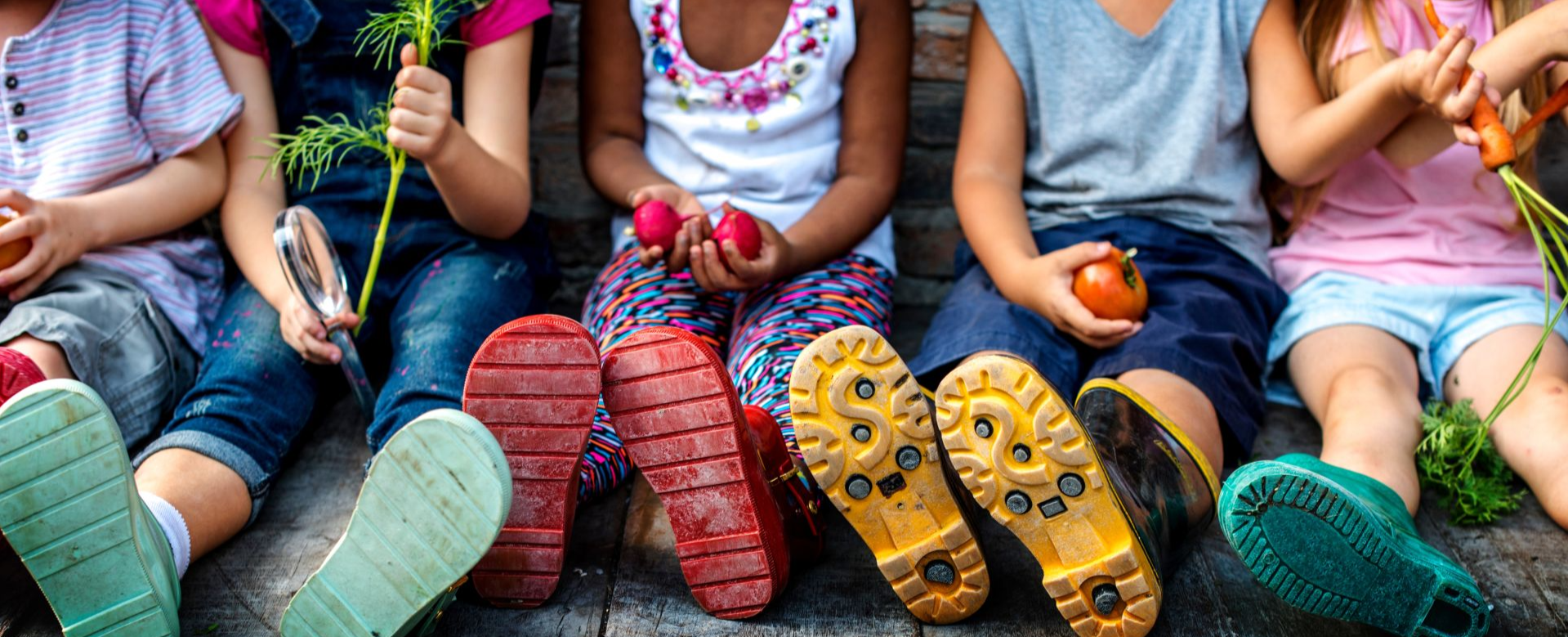
Edible flowers and vegetables can also create exciting sensory play opportunities if carefully supervised and age-appropriate:
- Nasturtiums
-
Snap peas
-
Strawberries
-
Lettuce
Because young children explore with all of their senses, plant safety should always be part of sensory garden planning. Programs should carefully verify that all plants are safe for children, especially in spaces where tasting or close exploration may occur.
Some common garden plants may not be appropriate for early childhood settings. For example, rhubarb leaves are toxic if ingested, and some plants can irritate skin or cause allergic reactions. Tomato leaves and stems are also generally considered unsafe to consume in large quantities. Cornell University maintains helpful information on plants that can be poisonous:
Cornell University Poisonous Plants Information, or Poison Control offers this
illustrated list. If you ever suspect a child has ingested a poisonous plant, contact Poison Control immediately rather than waiting for symptoms to appear.
Other safety considerations include avoiding plants with sharp thorns, inspecting regularly for mushrooms or unknown plant growth, and protecting the area to prevent animal visitors from contaminating the garden space.
One of the most powerful things about sensory gardens is how naturally inclusive they can be.
Children experience sensory input differently. Some children actively seek sensory experiences, while others may feel cautious or overwhelmed by certain textures, smells, or sounds. A thoughtfully planned sensory garden creates multiple ways to engage with plants (looking, smelling, touching, watering, harvesting). Consider using raised planters or container gardens for wheelchair accessibility, or include visual supports in the form of picture labels for plant identification or visuals of plant life cycles.
In sensory gardens, participation does not need to look the same for every child. One child may eagerly dig in the dirt, while another chooses to observe from nearby before joining later. Some children may prefer smelling herbs or watering plants instead of touching messy textures directly. Offering multiple ways to participate helps sensory play feel more accessible and successful for children with different sensory preferences and support needs.
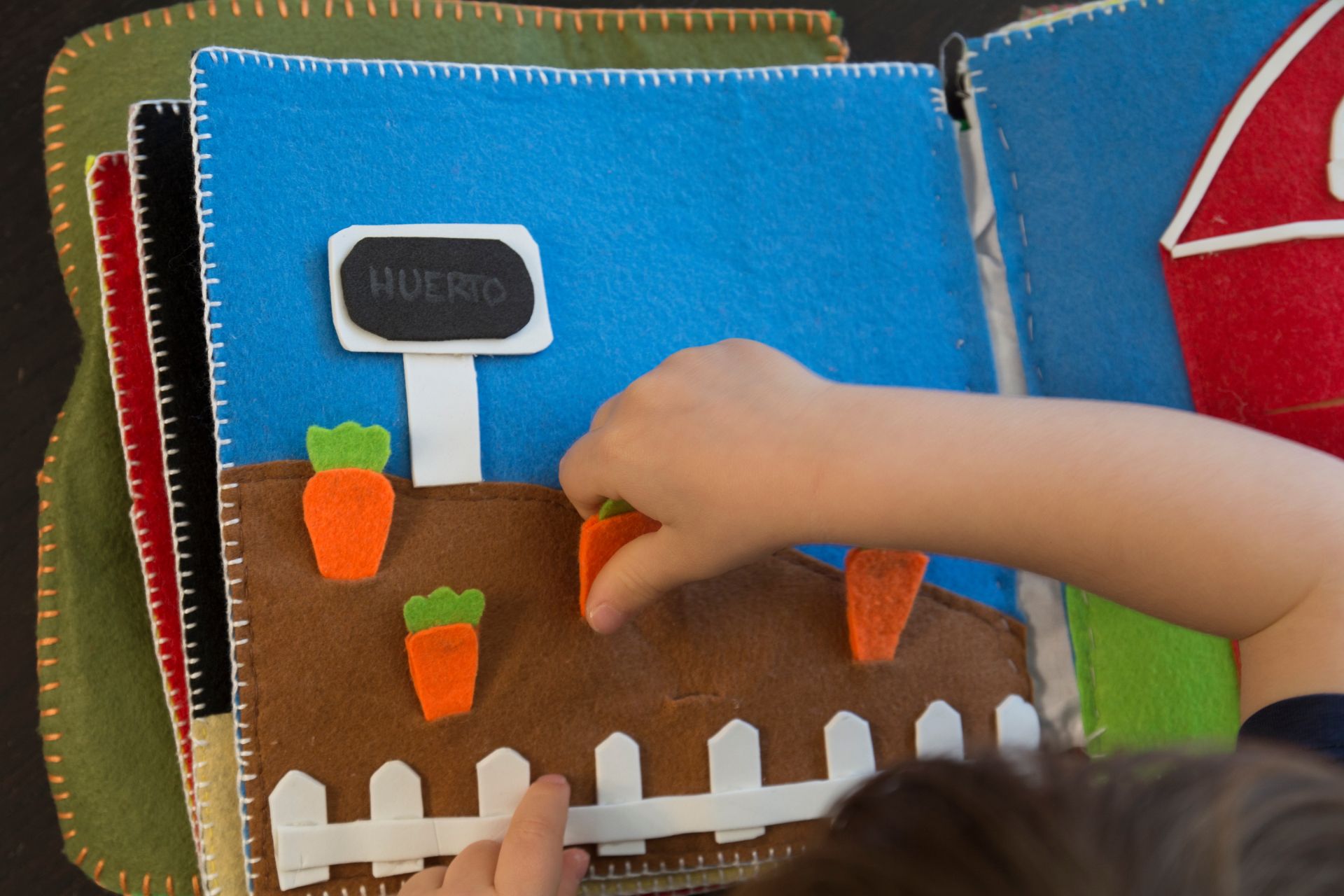
Books can help extend sensory garden experiences into literacy, science, and conversation. Some wonderful options include:
-
-
The Tiny Seed by Eric Carle
-
Secrets of the Vegetable Garden by Carron Brown is a shine-a-light book that is especially engaging because children can use flashlights or hold a page up to the light to explore hidden images and details.
-
-
The Little Gardener by Jan Gerargi is a lift-the-flap board book for very young children
These are just a few of many books that work beautifully for garden-themed story times.
A sensory garden does not need to be large or elaborate to be meaningful. Some programs begin with a single planter box of herbs, while others create a small digging area, edible garden, or touch-and-smell station outdoors. Over time, children can help expand the space based on their interests and observations.
Inside the course, educators learn:
-
How the sensory system develops in young children
-
Practical classroom strategies that support children of all abilities
-
How to look at everyday routines through a sensory lens
As many educators discover, sensory play is not always one-size-fits-all. Some children seek intense sensory experiences and messy play, while others become overwhelmed by certain textures or noises. For a deeper understanding of those sensory differences, check out this on-demand course:
Sensory Strategies & the Brain: Promoting Self-Regulation & Learning Inside the course, you’ll learn:
-
The difference between sensory seeking and sensory avoiding
-
Brain-based strategies to help your entire classroom get regulated and ready to learn
-
How to create a Sensory Matrix that can be customized for the unique sensory needs of your students
For early childhood educators, sensory gardens offer something many classroom materials cannot: real-world, living, changing experiences that invite children to slow down, notice, and engage with the world around them. And perhaps just as importantly, they remind educators that meaningful learning does not always require elaborate materials or perfectly planned activities. Sometimes the most powerful moments happen when children are simply given time, space, and support to explore.
- The IMPACT Team
Note: Course links and offers mentioned in this post may have changed since publication. To see what’s currently available, visit our course library.